1. What Is Tennessee State Tax Filing?
Tennessee state tax filing refers to the process of complying with certain
business and industry-specific taxes administered by the
Tennessee Department of Revenue
.
Importantly, Tennessee does not impose a personal state income tax on
individuals.
However, specific filing obligations still exist for businesses and entities with
Tennessee-based activity, including Tennessee franchise and excise taxes,
sales and use tax, and other business-related tax filings.
This is separate from federal income tax filing with the IRS.
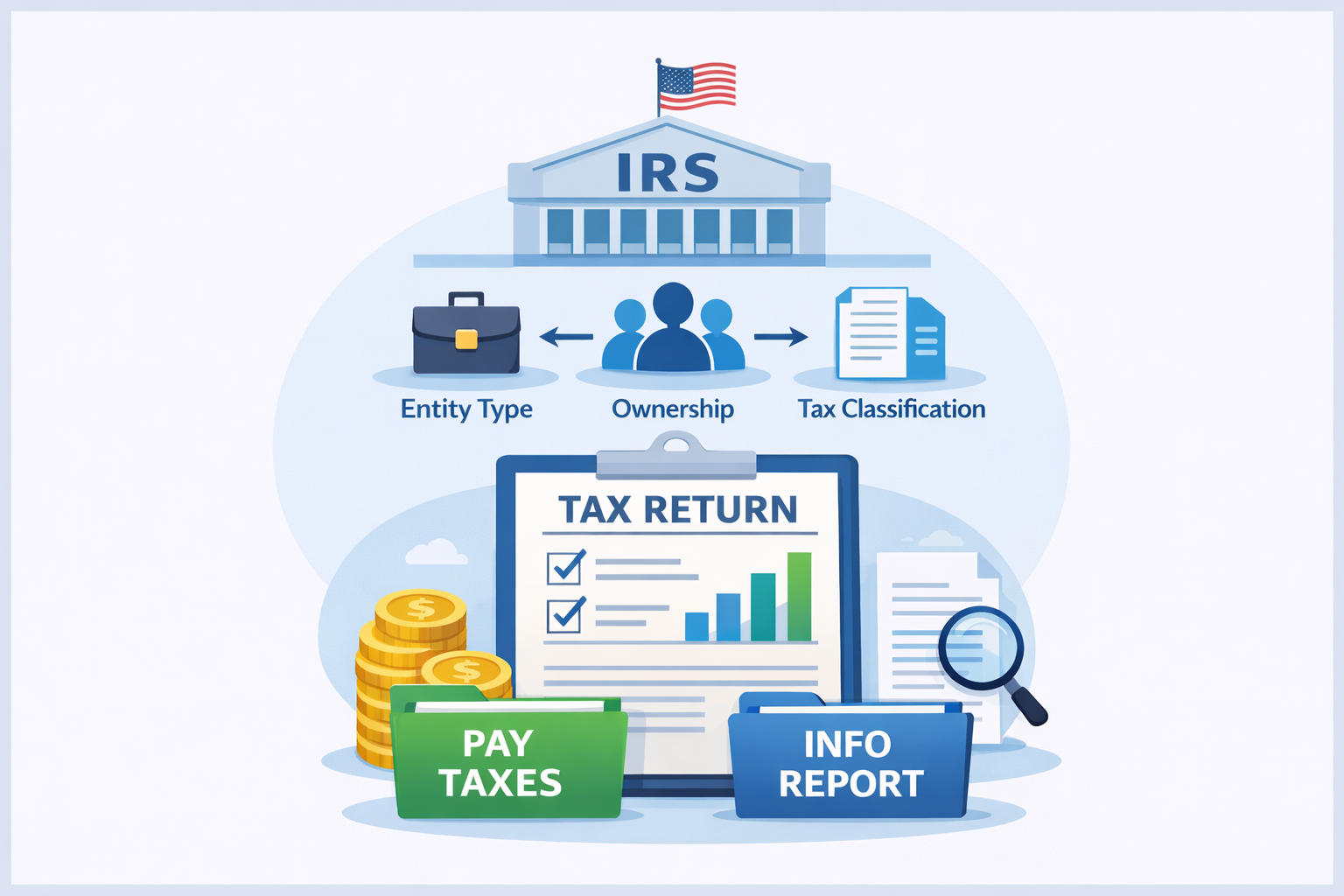
2. Who Must File in Tennessee?
Most individuals do not need to file a Tennessee state income tax return because Tennessee has no personal income tax. However, filing may still be required in these situations:
Quick checklist (common scenarios)
- Businesses and entities with Tennessee nexus subject to Tennessee franchise and excise taxes (including C-Corporations, LLCs, partnerships, and most LLCs)
- Businesses required to file Tennessee sales and use tax returns due to taxable sales, leases, or services in Tennessee
- Businesses with prior Tennessee tax registrations that must file required returns even if no tax is due
3. Tennessee Tax Forms – What to File
Tennessee does not require individuals to file a personal state income tax return. There are no standard Tennessee individual income tax forms for most taxpayers.
When Tennessee tax forms are required
- No individual income tax return is required for residents or most nonresidents
- Tennessee Franchise Tax reports apply to entities doing business in Tennessee, including C-Corporations, LLCs, partnerships, and S-Corporations (with limited exceptions)
- Tennessee Franchise & Excise Tax returns (Forms FAE170 / FAE173)
- Tennessee Sales & Use Tax returns (monthly or quarterly, depending on volume)
Most people moving to or living in Tennessee enjoy the benefit of no state income tax. Confirming whether you have any Tennessee-based business activity early avoids surprises.
4. Documents Required for Tennessee Tax Filing (When Applicable)
If you determine you need to file with Tennessee, prepare these documents in advance:
- Federal tax records (used for reference only; not filed with Tennessee)
- Tennessee business tax records: franchise tax reports, sales tax filings, or industry-specific tax documents (if applicable)
- Business income records related to Tennessee franchise, excise, or sales tax: profit, expenses, production reports
- Prior Tennessee returns (if any): for consistency and carryovers
NEED HELP WITH TENNESSEE STATE TAX FILING?
Confirm whether you have any Tennessee filing obligation and get clear guidance on forms, deadlines, and compliance.
Get Tennessee Tax Help5. DIY vs Accountant vs Managed Filing (Tennessee)
Businesses operating in or connected to Tennessee typically choose one of three approaches:
handle filings themselves, hire an accountant, or use a managed filing service.
The best option depends on business activity, filing volume, and compliance risk.
While Tennessee does not levy a personal state income tax, businesses may still be
required to file and pay franchise & excise tax, sales and use tax, business tax,
or industry-specific state taxes.
What typically increases Tennessee filing complexity?
- Multiple entities, locations, or registered activities in Tennessee
- Tennessee franchise & excise tax exposure or nexus-related obligations
- Sales tax collection, marketplace facilitator rules, or resale exemptions
Why businesses choose managed Tennessee filing
- Reduced risk of missed franchise, excise, or sales tax filings
- Clear compliance timeline aligned with Tennessee deadlines
- Correct tax classification and registration with the Tennessee Department of Revenue
| Feature | FormLLC | Provider A | Provider B |
|---|---|---|---|
| Understanding of Tennessee tax structure | ✅ Franchise, excise & sales tax focused | ➖ General compliance only | ➖ Limited state-specific depth |
| End-to-end support (Registration → Filing → Ongoing compliance) | ✅ Structured guidance | ➖ Partial assistance | ➖ Filing-only service |
| Transparent pricing | ✅ Clear scope & pricing | ⚠️ Add-on based | ⚠️ Tier-based costs |
| Human support (Email / WhatsApp) | ✅ Direct support access | ➖ Ticket-based | ➖ Delayed responses |
Tax filing is not just “submitting a form.” The real risk is wrong entity classification, missing state registrations, missing sales details, and late filings. A clean checklist and correct form selection saves time and avoids notices.
6. Step-by-Step: Tennessee State Tax Filing (When Required)
Step 1: Confirm if you have a Tennessee filing requirement
Most individuals do not. Check for Tennessee-source income or special industry taxes.
Step 2: Gather federal return and Tennessee-source documents
Collect W-2s, 1099s, federal 1040, and any Tennessee-specific income records.
Step 3: Determine the correct form (if needed)
Individuals do not file Tennessee tax returns. Only businesses and entities file Tennessee franchise, excise, or sales tax returns when required.
Common filing deadlines: Tennessee franchise and excise tax returns are generally due April 15, while sales tax returns follow monthly or quarterly schedules.
Step 4: Prepare and review the return
Use the Tennessee Comptroller’s Webfile system, approved tax software, or professional assistance.
Step 5: Submit and keep records
File electronically or by mail. Retain confirmation.
Step 6: Plan for next tax year
Maintain organized business income, expense, and transaction records throughout the year to simplify future Tennessee tax compliance, including franchise & excise tax, sales and use tax, or other applicable state filings, and to reduce the risk of errors or penalties.
Helpful tax references:
- IRS Small Business and Self-Employed resources
- Tennessee Department of Revenue – Business Taxes overview
If you prefer guided assistance, FormLLC can help confirm your Tennessee filing requirements and coordinate the preparation and compliance process.
7. Tips to Avoid Tennessee Tax Notices
- Confirm whether you actually need to file (most individuals do not)
- Report Tennessee-based business activity correctly if applicable
- File by April 15 if a return is required
- Keep good records of income sources and apportionment
- Respond promptly to any correspondence from the Tennessee Department of Revenue
8. Tennessee Tax Costs, Penalties, and Filing Timelines
- Filing preparation cost: Varies based on business type, tax category (franchise & excise, sales and use, or business tax), and filing method used
- Record cleanup: Optional but helpful if sales, gross receipts, or transaction records are incomplete
- Late filing penalty: Generally 5 percent of the unpaid tax per month, up to a maximum of 25 percent, depending on the tax type
- Interest on unpaid tax: Accrues at rates set annually by the Tennessee Department of Revenue
- Filing extensions: Franchise & excise tax extensions are available, typically extending the filing deadline to October 15; extensions apply to filing, not payment
| Task | Typical Timing | Notes |
|---|---|---|
| Document collection | January to February | Sales reports, gross receipts, and financial statements |
| Tennessee franchise & excise tax return | Due April 15 | Applies to most LLCs and corporations doing business in Tennessee |
| Sales and use tax return | Monthly or quarterly | Frequency depends on registration and sales volume |
| Extension | Automatic to October 15 | Extends filing deadline, not tax payment |
| Return confirmation and record storage | After filing | Retain TNTAP confirmations and payment receipts |
| Next-year tax planning | Throughout the year | Helps manage nexus, tax exposure, and compliance deadlines |
9. Common Federal and Tennessee Tax Forms
1. EIN (Employer Identification Number)
An Employer Identification Number (EIN) is issued by the Internal Revenue Service and is used to identify a business for federal and Tennessee state tax reporting, including franchise, excise, sales, and employer-related tax filings.
2. Federal Partnership Return (Form 1065)
Multi-member LLCs file a federal informational return using Form 1065 . Income reported on Schedule K-1 is used for Tennessee franchise and excise tax calculations and partner-level federal income tax reporting.
3. Federal Corporate Return (Form 1120)
US C-Corporations file Form 1120 at the federal level. Corporate income figures are used to determine Tennessee franchise and excise tax obligations.
4. Tennessee Business Tax Forms
- Franchise & Excise Tax Return: Required for most LLCs and corporations operating in Tennessee
- Tennessee Business Tax Return: Applies to businesses with gross receipts sourced to Tennessee
5. Owner Individual Filing (when applicable)
- Tennessee does not impose a personal state income tax on wages or earned income
- Business owners report income only at the federal level using IRS forms
- SSN or ITIN may still be required for federal tax filing and business registration
10. Conclusion
Tennessee remains one of the few states with no personal state income tax, making it attractive for individuals and many businesses. However, specific filing obligations can still apply for Tennessee-source income or certain industries.
Understanding your situation helps you stay compliant without unnecessary filings. FormLLC can help confirm your Tennessee tax obligations quickly and clearly.
11. Frequently Asked Questions
No. Tennessee does not impose a personal state income tax on individuals, wages, investments, retirement income, or most other personal earnings. This makes it one of the most tax-friendly states for residents.
Most individuals do not need to file any Tennessee state income tax return. Filing may be required only in limited cases, such as businesses and entities with Tennessee nexus subject to franchise, excise, sales, or other industry-specific taxes, or in rare situations where Tennessee tax withholding occurred and a refund is being claimed.
Since Tennessee has no personal income tax, there is no standard individual state tax filing deadline. For any rare required filings (e.g., corporate or special taxes), deadlines generally align with federal dates (often April 15 or later for extensions), but most individuals have no Tennessee filing obligation.
Individuals generally do not file any Tennessee personal income tax forms, as there is no state income tax. No Form 40, 40NR, or similar individual return is required for most taxpayers. Special business or industry-specific forms may apply in limited cases (e.g., franchise, excise, or sales tax or fisheries/mining reports).
Not applicable for personal income, since Tennessee does not tax individual income at the state level. Federal taxes paid remain deductible on your federal return where allowed, but there is no Tennessee state adjustment or deduction needed.
For the vast majority of individuals, no filing is required, so no penalties apply. In cases where a return is required (e.g., certain business taxes), late filing may result in penalties and interest per rules issued by the Tennessee Comptroller of Public Accounts— typically percentage-based on unpaid amounts, similar to federal standards.
Yes. FormLLC can review your situation, confirm whether you have any Tennessee filing obligation (often none for individuals), and provide guidance on any special taxes, compliance, or related federal/LLC matters to ensure peace of mind.