1. Does California Require an LLC Annual Report?
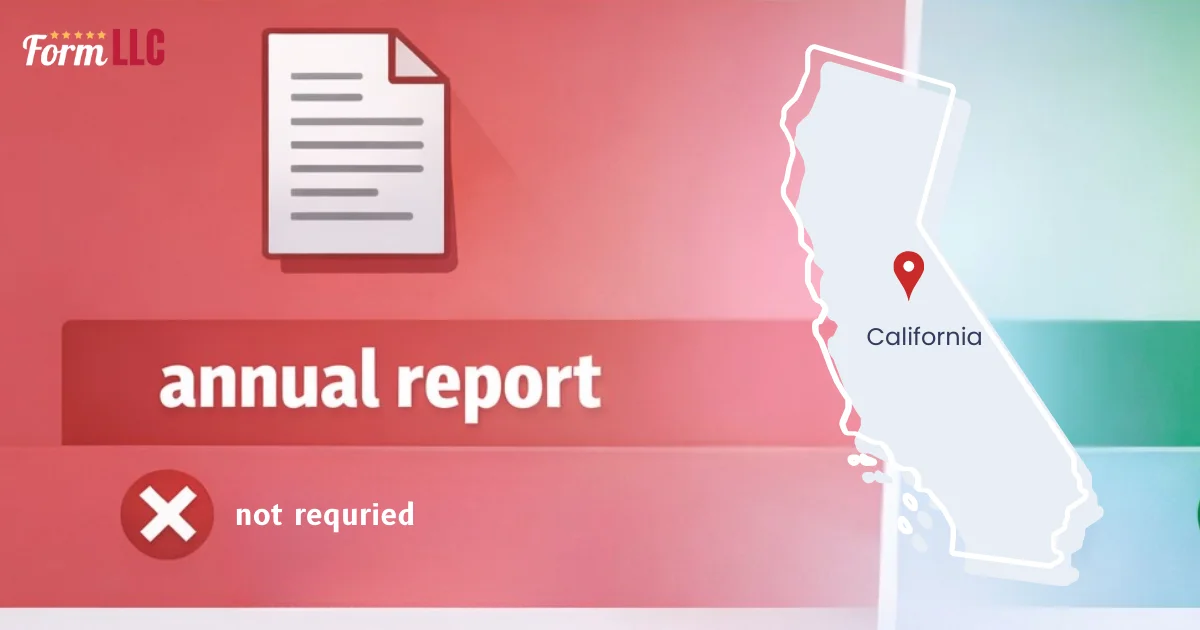
California LLCs usually do not file a document literally named “annual report.” When people say “California annual report,” they are typically talking about your recurring compliance, which is commonly handled through: (1) Statement of Information filing (Form LLC-12) with the California Secretary of Statev , and (2) the $800 annual tax to the Franchise Tax Board (FTB).
2. What California LLCs Must Do Each Year
California recurring compliance usually comes down to this checklist. Exact requirements depend on your LLC’s tax classification and your business activity, but most LLCs should plan for:
Annual compliance checklist
- $800 annual tax (FTB): recurring annual payment to California Franchise Tax Board
- Statement of Information (LLC-12): recurring filing with California Secretary of State (biennial schedule for LLCs)
- Registered Agent renewal (if using a service): keep a valid agent to receive official/legal notices
- Federal tax return (IRS): depends on SMLLC vs partnership vs S-corp election
- Local permits / licenses: city/county requirements can apply depending on activity and location
- Bookkeeping + records: maintain clean records to avoid issues with banks, payments, and audits
3. The “Annual Report” Equivalent: Statement of Information (LLC-12)
California’s Secretary of State recurring filing for LLCs is the Statement of Information (commonly filed on Form LLC-12). It’s used to keep the state updated with key info like your addresses, registered agent, and management structure.
What the Statement of Information typically covers
- Principal address + mailing address (if different)
- Registered agent details
- Management structure and key names (as required)
- Updates to business contact information
- Keeps your LLC in good standing on SOS records
If you only remember one thing: California LLCs usually don’t file a “SOS annual report” form—your recurring SOS filing is the Statement of Information, plus you must handle the $800 annual tax with the FTB.
4. California Due Dates (Common Scenarios)
California compliance has two timelines most founders track: (1) Statement of Information (LLC-12) filing period, and (2) $800 annual tax timing for your LLC’s taxable year.
Common “what’s due when”
- Statement of Information: first due within 90 days of registration; then every 2 years thereafter
- $800 annual tax (first year): commonly due by the 15th day of the 4th month from the date you file/register with the SOS
- $800 annual tax (later years): typically due by the 15th day of the 4th month of your taxable year
What can change your due date?
- Your taxable year is not a calendar year
- You changed entity tax classification
- You registered later in the year (first-year $800 due date shifts)
- Local license renewal dates vary by city/county
STAY COMPLIANT
Click the button below and our team will guide you through California’s recurring filings and payments—fast and correctly.
Get Compliance Help5. Where to File + What You’ll Need
California LLC compliance typically involves two main agencies: California Secretary of State (SOS) for the Statement of Information, and California Franchise Tax Board (FTB) for the $800 annual tax and LLC return. Before you file, prepare your basics so you don’t get rejected or delayed.
What you should keep ready
- Legal LLC name and California entity number (SOS file number)
- Principal business address + mailing address
- Registered agent details
- Management structure (member-managed vs manager-managed) and required names
- FTB account/payment method details (for $800 annual tax payment)
Why founders use a compliance service
- Avoid missed deadlines and penalties
- Reduce rejections due to incorrect information
- Keep clean records for banking and payment processors
| Feature | FormLLC | Provider A | Provider B |
|---|---|---|---|
| Built for non-US founders | ✅ Deep non-resident focus | ➖ Limited support | ➖ Generic templates |
| End-to-end compliance guidance | ✅ State + federal clarity | ➖ Partial | ➖ DIY-heavy |
| Transparent pricing | ✅ No surprise upsells | ⚠️ Hidden add-ons | ⚠️ Tiered upsells |
| Human support (WhatsApp / email) | ✅ Dedicated support | ➖ Ticket-based | ➖ Slow response |
*Sample stats for illustration. Add your real numbers and link to verified reviews.
California compliance is strict. Missing your SOS Statement of Information or FTB obligations can lead to suspension or forfeiture, which can disrupt banking access, payment processing, and vendor verification.
6. How to File California Compliance (Step-by-Step)
Step 1: Confirm your management details + registered agent
Before filing your Statement of Information, confirm your addresses, registered agent, and whether your LLC is member-managed or manager-managed. Incorrect info can cause delays or future verification issues.
Step 2: File the Statement of Information (Form LLC-12)
File your Statement of Information through the California Secretary of State’s online system ( BizFile ). This keeps your LLC’s record updated and helps maintain good standing.
Step 3: Pay the $800 annual tax to the FTB
Most California LLCs pay the $800 annual tax (even if revenue is low or the LLC is inactive). Save your payment confirmation and keep it in your compliance folder.
Step 4: File your California LLC return (if required)
Depending on classification and income, the LLC may have additional reporting (including potential LLC fee requirements). Keep records clean and consult a tax professional for your specific classification.
Step 5: Track local permits / licenses
City/county permits and business licenses can apply depending on your location and activity (especially for local operations). Keep reminders so you don’t miss renewal dates.
7. Tips to Stay Compliant
- Set reminders for your LLC-12 filing period (every 2 years after the first filing)
- Set a recurring reminder for the $800 annual tax (FTB)
- Keep Registered Agent details updated to avoid missed notices
- Maintain accurate financial records and store filing/payment confirmations
- If ownership/management changes, update your records promptly (and file updates if required)
8. Fees, Penalties & Good Standing
- Statement of Information (LLC-12): filing fee applies (commonly $20 online for LLCs)
- $800 annual tax (FTB): recurring annual tax for many LLCs
- Possible LLC fee: may apply depending on California total income thresholds
- Late filings: can trigger penalties and good standing issues
- Good standing impact: compliance affects banking, payment platforms, and vendor onboarding
| Compliance Item | Typical Timing | Fee |
|---|---|---|
| Statement of Information (LLC-12) | Within 90 days, then every 2 years | $20 (commonly online) |
| $800 Annual Tax (FTB) | 15th day of the 4th month timing (varies by taxable year) | $800 |
| Registered Agent Renewal | Annually | $100–$300 |
| Federal Income Tax Return | Annually | Varies |
| “Annual Report” (Standalone) | Not typically a separate SOS annual report for CA LLCs | $0 |
9. Federal Compliance That Impacts California LLCs
1. Federal tax return (IRS)
Your California LLC’s federal tax filing depends on classification: single-member LLCs often report on the owner’s return, partnerships file an informational return, and S-corp elections follow S-corp filing rules. These federal schedules often influence your overall compliance planning.
2. EIN (Employer Identification Number)
Many LLCs use an EIN to open bank accounts, hire employees, and work with payment processors. Keeping your EIN-related records and IRS confirmations helps with compliance documentation.
3. BOI updates (Corporate Transparency)
If your ownership or key information changes, you may need to update federal beneficial ownership information (where applicable). This is separate from California yearly compliance but often comes up during annual reviews.
4. Other recurring federal obligations
- Payroll tax filings if the LLC has employees
- Information returns (such as 1099 forms) when required
- Keeping clean bookkeeping for audits, banking, and compliance reviews
10. Conclusion
The biggest takeaway: California LLCs usually don’t file a document called a standalone “annual report.” Your ongoing compliance is mainly: Statement of Information (LLC-12) + $800 annual tax (FTB) (and any additional requirements that apply to your specific situation).
With FormLLC, you can stay compliant without confusion—our team helps you follow the right schedule, file the right forms, and keep your business in good standing.
11. Frequently Asked Questions
California LLCs usually don’t file a document literally called an “annual report.” Instead, the recurring SOS filing is the Statement of Information (Form LLC-12) and most LLCs also pay the $800 annual tax to the FTB.
Form LLC-12 is the California Statement of Information used to keep the Secretary of State updated with your LLC’s key details.
Your first Statement of Information is due within 90 days of registration. After that, California LLCs generally file every 2 years based on the filing period tied to the original registration date.
Many LLCs pay the first-year $800 annual tax by the 15th day of the 4th month from the registration date, and subsequent annual tax payments are generally due by the 15th day of the 4th month of the taxable year.
Yes. California LLCs can file the Statement of Information online through the Secretary of State’s BizFile system. The $800 annual tax is handled with the Franchise Tax Board (FTB).
Missing required filings can trigger penalties and may result in suspension/forfeiture, which later creates problems with banks, payment processors, vendor onboarding, and contracts. If you missed a deadline, file as soon as possible and keep proof.
In simple terms, yes—California’s Statement of Information is what most people mean when they say “annual report.” For LLCs, it’s typically on a biennial schedule, not yearly.