1. Does South Carolina Require an LLC Annual Report?
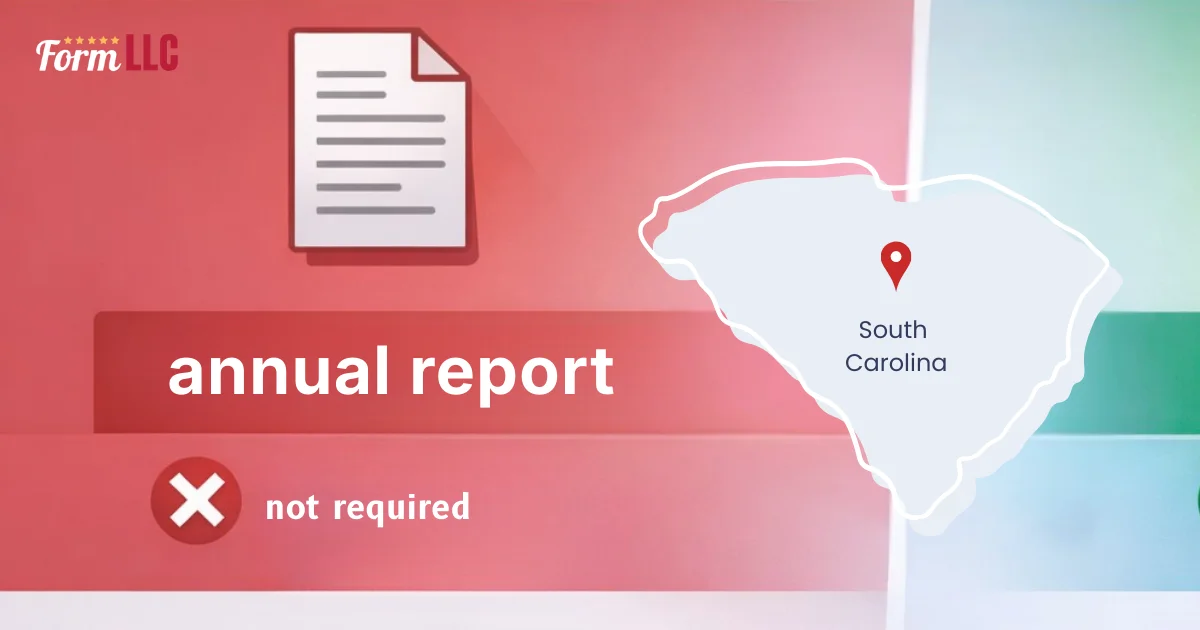
In most situations, South Carolina does not require LLCs to file a separate “annual report” with the Secretary of State the way some other states do. When founders say “South Carolina annual report,” they are usually referring to recurring yearly compliance, which is driven mainly by:
- Your tax classification: what you file with the South Carolina Department of Revenue each year
- Local business rules: city/county license requirements and other local renewals
- Registered agent: keeping a valid agent/address for legal notices
2. What South Carolina LLCs Must Do Each Year
South Carolina yearly compliance is not one-size-fits-all. Your checklist depends on your LLC’s tax classification and where you operate. But most LLCs should plan for these recurring items:
Annual compliance checklist
- State tax filing (SCDOR): depends on whether the LLC is treated as a disregarded entity, partnership, S-corp, or C-corp
- “Annual report” section (when applicable): if you file corporate-type returns, you may complete Schedule D (Annual Report) with SC1120/SC1120S
- Local business licensing: many businesses must maintain local licenses depending on city/county rules
- Registered Agent renewal (if using a service): keep a valid agent and address for official/legal notices
- Federal tax return (IRS): depends on SMLLC vs partnership vs S-corp election
- Bookkeeping + records: keep clean records for banks, payments, audits, and year-end filing accuracy
3. The “Annual Report” Equivalent in South Carolina
South Carolina can be confusing because the “annual report” is not always a standalone form for LLCs. In many cases, the “annual report” shows up as an annual report section (Schedule D) inside certain returns filed with the South Carolina Department of Revenue .
When Schedule D (Annual Report) typically applies
- LLC taxed as a C-corporation: commonly files SC1120 (includes annual report Schedule D + license fee)
- LLC taxed as an S-corporation: commonly files SC1120S (includes annual report Schedule D for corporations)
- LLC taxed as a partnership or disregarded entity: may not have a “Schedule D annual report,” but still has annual filing obligations depending on facts
If you only remember one thing: South Carolina LLCs usually don’t file a separate SOS annual report—the “annual report” concept is most often tied to tax filings (especially corporate-type filings that include Schedule D).
4. South Carolina Due Dates (Common Scenarios)
South Carolina due dates depend on your taxable year and how your LLC is treated for tax purposes. Here are common scenarios founders run into:
Common examples
- LLC taxed as C-corp (SC1120): commonly due by the 15th day of the 4th month after tax year end
- LLC taxed as S-corp (SC1120S): commonly due by the 15th day of the 3rd month after tax year end
- Partnership / Disregarded entity: often aligns with the corresponding federal schedule (varies)
What can change the due date?
- Your taxable year is not a calendar year
- You filed a federal extension (and/or state extension rules apply)
- Your classification is different than expected
- Local license renewal dates vary by city/county
STAY COMPLIANT
Click the button below and our team will guide you through South Carolina’s yearly filings and renewals—fast and correctly.
Get Compliance Help5. Where to File + What You’ll Need
South Carolina annual compliance typically involves two areas: state tax filing (SCDOR) and local business requirements (city/county rules). Before you file, prepare your basic business details so you can submit without errors.
What you should keep ready
- Legal LLC name and any SC account/registration identifiers you use for tax filing
- Principal address and registered agent details
- Federal tax classification (single-member, partnership, S-corp, C-corp, etc.)
- Basic financial totals used for state reporting (as required)
- Your login/access to the state’s online tax system (often MyDORWAY) if filing online
Why founders use a compliance service
- Avoid missed deadlines and late penalties
- Reduce rejections due to incorrect information
- Keep clean records for banking and payment processors
| Feature | FormLLC | Provider A | Provider B |
|---|---|---|---|
| Built for non-US founders | ✅ Deep non-resident focus | ➖ Limited support | ➖ Generic templates |
| End-to-end compliance guidance | ✅ State + federal clarity | ➖ Partial | ➖ DIY-heavy |
| Transparent pricing | ✅ No surprise upsells | ⚠️ Hidden add-ons | ⚠️ Tiered upsells |
| Human support (WhatsApp / email) | ✅ Dedicated support | ➖ Ticket-based | ➖ Slow response |
*Sample stats for illustration. Add your real numbers and link to verified reviews.
“Annual report” confusion is common. What matters is staying in good standing: file the correct state return based on classification (and Schedule D if applicable), follow local licensing rules, and keep your registered agent active. This avoids issues with banks, payment gateways, and vendor verification.
6. How to File South Carolina Compliance (Step-by-Step)
Step 1: Confirm your tax classification
First, confirm how your LLC is treated for taxes (single-member, partnership, S-corp election, C-corp election, etc.). This determines which forms you file and whether an annual report section (Schedule D) applies.
Step 2: Gather the info you’ll need
Prepare your LLC details (name, addresses, registered agent info, and basic financial information as required). Having this ready reduces errors and rejections.
Step 3: File online (recommended) or by mail if needed
Many South Carolina business tax filings can be completed online through the state’s tax portal (MyDORWAY). Online filing is faster and helps you keep a clean record for compliance history.
Important: Local business rules and licensing are handled at the city/county level and may have different deadlines.
Step 4: Pay any tax / fee due and save proof
If the filing results in a payment (tax, license fee, etc.), pay it on time and save proof (confirmation, receipt, and return copy). This is helpful for audits, banking, and future compliance.
Step 5: Keep local compliance updated
Many businesses must maintain local compliance depending on where they operate. The amount and deadline can vary by location and activity. Keep a renewal reminder so you don’t miss it.
7. Tips to Stay Compliant
- Set reminders based on your classification (C-corp vs S-corp vs partnership vs single-member)
- Use consistent business info (addresses, registered agent details) across filings
- Store confirmations, receipts, and submitted copies in one place
- Keep Registered Agent details updated to avoid missed notices
- Watch for local business license requirements where you operate
8. Fees, Penalties & Good Standing
- State filing fees/taxes: depend on entity type/classification and calculations
- Corporate license fee (where applicable): may be due with corporate-type filings
- Local business licenses: vary by city/county and business activity
- Registered Agent (if using a service): typically $50/year
- Late filings: can trigger penalties/interest and create good-standing issues
- Good standing impact: compliance affects banking, payment platforms, and vendor onboarding
| Compliance Item | Typical Timing | Fee |
|---|---|---|
| State Tax Filing (SCDOR) | Annually (varies by classification/tax year) | Varies |
| Schedule D Annual Report (if applicable) | Submitted with SC1120/SC1120S (corporate-type filings) | Varies |
| Local Business License (if required) | Often annually (city/county) | Varies |
| Registered Agent Renewal | Annually | $100–$300 |
| Federal Income Tax Return | Annually | Varies |
| Standalone SOS Annual Report | Often not required for SC LLCs | $0 |
9. Federal Compliance That Impacts South Carolina LLCs
1. Federal tax return (IRS)
Your federal filing depends on classification (IRS LLC guidance): single-member LLCs often report on the owner’s return, partnerships file an informational return, and S-corp elections follow S-corp filing rules. These federal schedules often influence state compliance timing.
2. EIN (Employer Identification Number)
Many LLCs use an EIN to open bank accounts, hire employees, and work with payment processors. While not an “annual report,” keeping your EIN-related records and IRS confirmations helps with compliance documentation.
3. BOI updates (Corporate Transparency)
If your ownership or key information changes, you may need to update federal beneficial ownership information (where applicable). This is separate from South Carolina yearly compliance but often comes up during annual reviews.
4. Other recurring federal obligations
- Payroll tax filings if the LLC has employees
- Information returns (such as 1099 forms) when required
- Keeping clean bookkeeping for audits, banking, and compliance reviews
10. Conclusion
The biggest takeaway: most South Carolina LLCs don’t file a standalone annual report with the Secretary of State. Your yearly compliance is driven by your tax classification and local rules. If your LLC is taxed as a corporation, your filing may include an annual report section (Schedule D) inside SC1120/SC1120S.
With FormLLC, you can stay compliant without confusion—our team helps you follow the right schedule, file the right forms, and keep your business in good standing.
11. Frequently Asked Questions
In most cases, South Carolina LLCs do not file a standalone annual report with the Secretary of State. The “annual report” concept in South Carolina usually comes up in tax filings, especially for entities filing corporate-type returns that include an annual report section.
Schedule D is commonly the annual report section inside certain South Carolina corporate tax returns (for example, SC1120 or SC1120S). It collects key company information and is submitted with the return.
Due dates depend on your LLC’s classification and taxable year. For example, C-corp filings are commonly due by the 15th day of the 4th month after year end, and S-corp filings commonly due by the 15th day of the 3rd month after year end. Always confirm based on your situation.
Yes. Many South Carolina business tax filings can be completed online through the state’s tax portal (MyDORWAY). Local business licenses are typically handled through your city or county.
Often, yes. Even with no income, many entities still have recurring compliance obligations depending on classification and local rules. Requirements may include informational returns, corporate filings (if elected), and local licensing.
Missing required filings can trigger penalties/interest and create good-standing issues that later cause problems with banks, payment processors, vendor onboarding, and contracts. If you missed a deadline, file as soon as possible and keep proof.
Not exactly. Local business licensing is typically a city/county requirement, while tax filings are handled at the state level. Together, these represent much of the “yearly compliance” founders are trying to cover in South Carolina.